
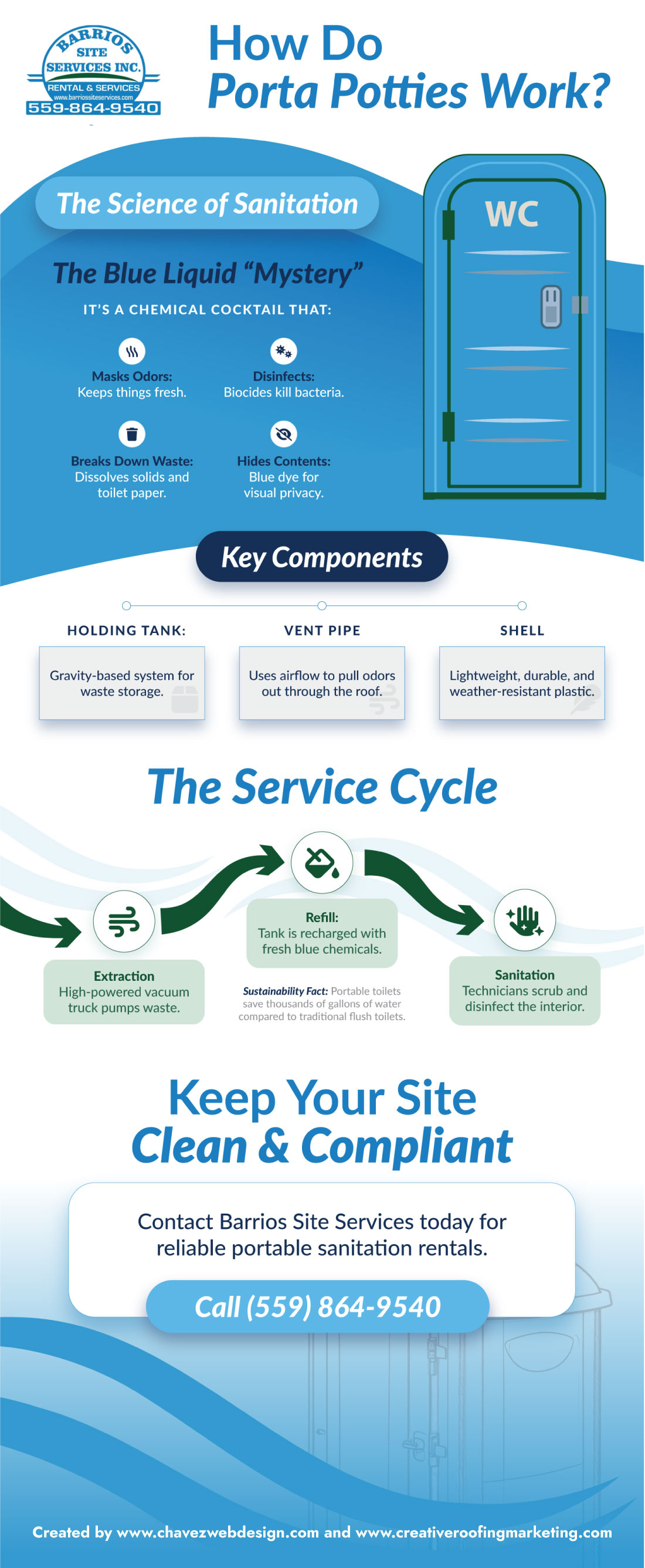
Portable restrooms are a common sight at construction sites, festivals, and agricultural fields throughout California. Despite their ubiquity, many people wonder, “How do porta potties work?”
These self-contained units are marvels of modern sanitation engineering, designed to provide a hygienic solution without the need for a connection to a sewer system or running water.

The Basic Anatomy of a Portable Toilet
A standard portable toilet consists of several key components: a lightweight, durable plastic shell, a holding tank, a ventilation pipe, and a locking door. The primary engine of the unit is the holding tank located beneath the seat. Most Standard Units utilize a gravity-based system where waste falls directly into this tank.
The Chemistry of Waste Management
To answer “how do porta potties work” effectively, we must look at the blue liquid inside.
This chemical cocktail serves four main purposes: it masks odors, breaks down solid waste and toilet paper, dyes the contents to hide them from view, and uses biocides to kill bacteria. This ensures the unit remains as fresh as possible between service cycles.

Different Models for Different Needs
While the basic mechanics remain similar, some units offer more features. For example, Deluxe Units often include a foot-pump-operated flushing mechanism. Instead of a direct drop, a small pump moves a portion of the blue chemical liquid to rinse the bowl. This keeps the interior cleaner for high-traffic events where a more “home-like” experience is preferred.
Maintaining Accessibility and Hygiene
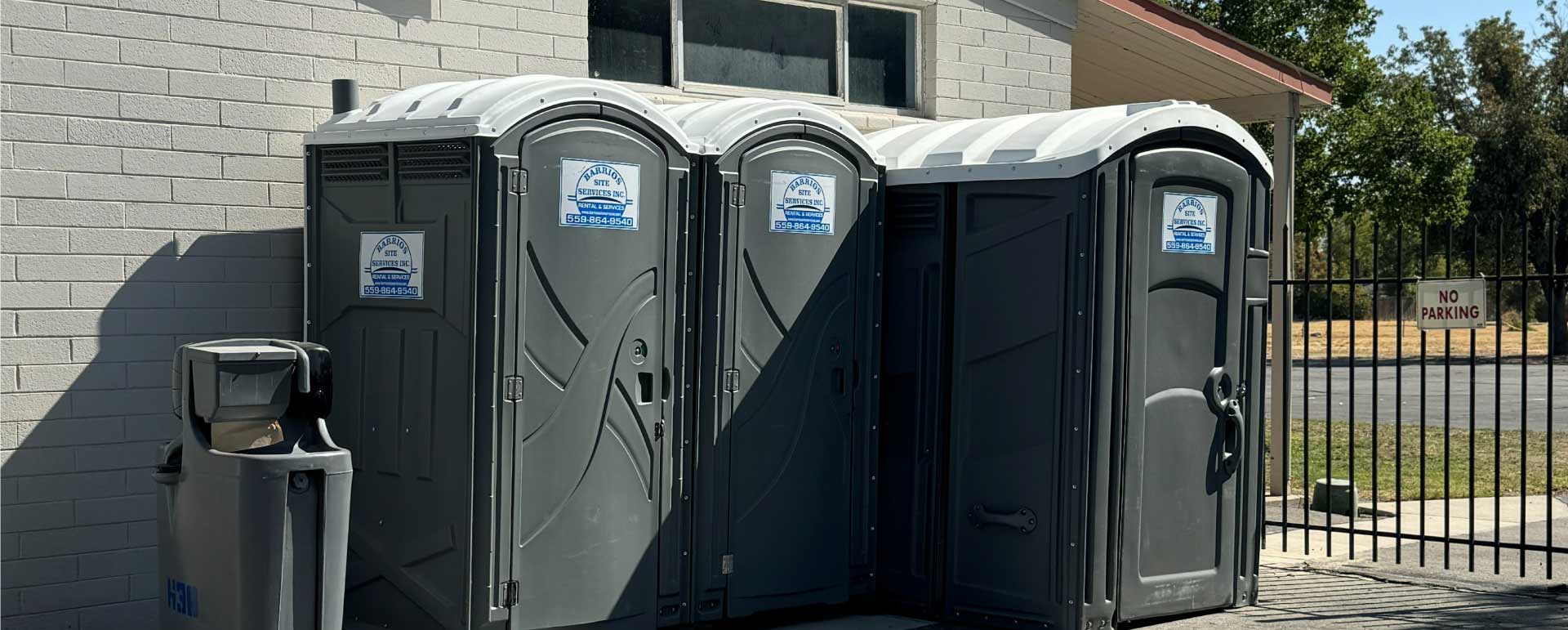
Sanitation is not just about waste; it is also about cleanliness. ADA Units work on the same principles but feature a much larger interior and reinforced grab bars to accommodate wheelchairs. Furthermore, many modern sites now pair these units with standalone Handwash Units to ensure that users can maintain proper hygiene after using the facility.
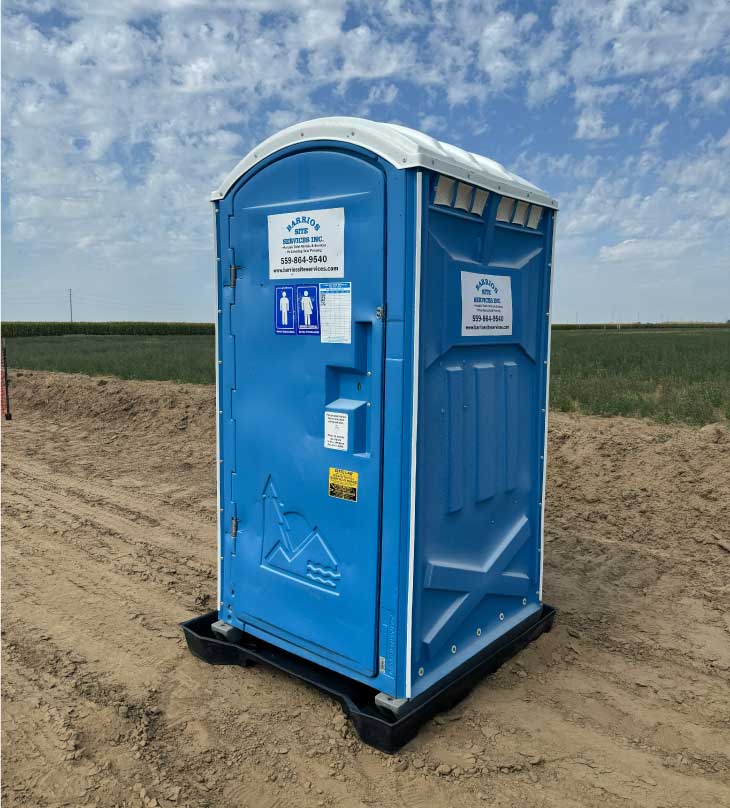
The Pumping and Servicing Process
The lifecycle of a portable toilet depends on professional maintenance. When a service truck arrives, it uses a high-powered vacuum hose to extract the waste from the holding tank. This waste is stored in a large tank on the truck and later transported to a municipal wastewater plant. Following the pump-out, technicians scrub the interior and refill the blue chemicals.
Mobility and Specialized Transport
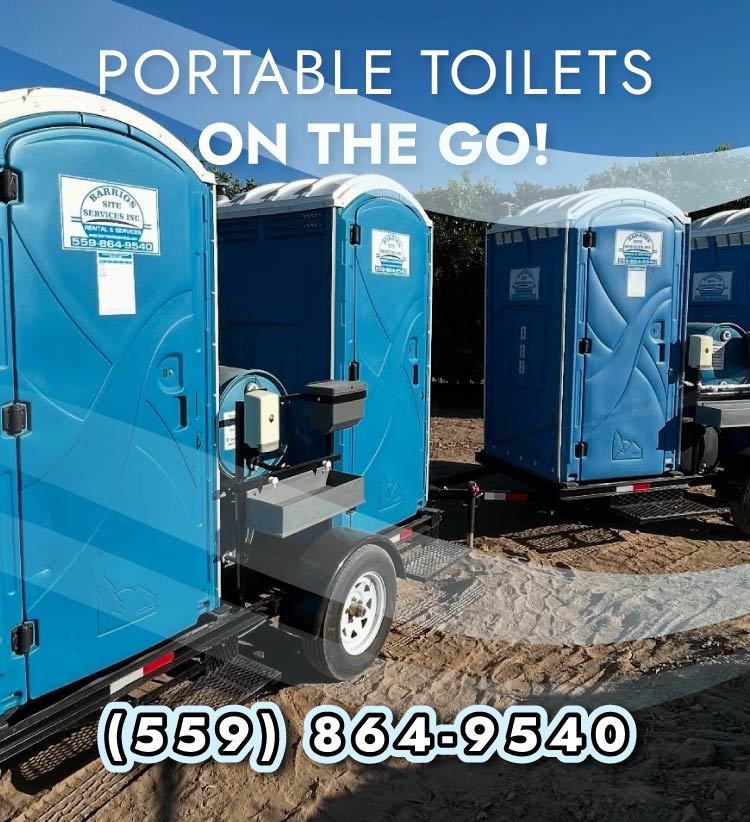
In the Central Valley, many agricultural and remote sites require units that move frequently. Towable Units are mounted on trailers, allowing for easy relocation as a project progresses. This mobility ensures that workers always have access to facilities without needing to walk long distances, which significantly boosts site productivity and worker morale.
Environmental Impact and Water Conservation
Portable toilets are surprisingly eco-friendly because they use significantly less water than traditional toilets. A standard flush toilet uses several gallons per flush, whereas a porta-potty relies almost entirely on the chemical tank.
According to the Environmental Protection Agency (EPA), utilizing water-saving technologies in temporary sanitation is a vital part of sustainable water management.
Experience Reliable Service with Barrios Site Services Inc.
At Barrios Site Services Inc., we take the mystery out of portable sanitation by providing exceptionally maintained units. Founded and led by Rafael Barrios, who has been in the industry since 2000, our company focuses on cleanliness and reliability.
We serve Fresno, Madera, Merced, Tulare, and Kings Counties with a commitment to high standards. Whether you need a simple unit for a field or a fleet for an event, we ensure every unit is ready for use.
Frequently Asked Questions (FAQs)
Does the blue liquid in a porta potty kill all germs?
The blue liquid contains biocides designed to significantly reduce the growth of bacteria and microbes. While it is highly effective at managing waste and odors, it is always recommended to use a handwash station or sanitizer after use for total hygiene.
How often should a portable toilet be cleaned?
For a standard job site with 10 workers, a portable toilet should be serviced at least once per week. However, for high-traffic public events, daily servicing may be required to keep the unit pleasant and functional.
Can porta potties freeze in the winter?
In extremely cold climates, technicians add a brine solution (salty water) to the holding tank. This lowers the freezing point of the liquid, ensuring that the waste management chemicals remain in liquid form even in sub-zero temperatures.
Where does the waste go after it is pumped out?
The waste is collected by a specialized vacuum truck and transported to a local wastewater treatment facility. There, it is processed and treated just like the waste that comes from a standard home sewage system.
Why do some porta potties have a "chimney" on top?
The chimney is actually a vent pipe. It uses natural heat and airflow to pull gases and odors from the holding tank up through the roof and away from the user, keeping the interior air much fresher.